Shri Thakur Rajgopal Ji Maharaj Ki Jai !
 Srimate Ramanujaya Namaha !
Achieving new heights through Rajgopalji Maharaj Kripa
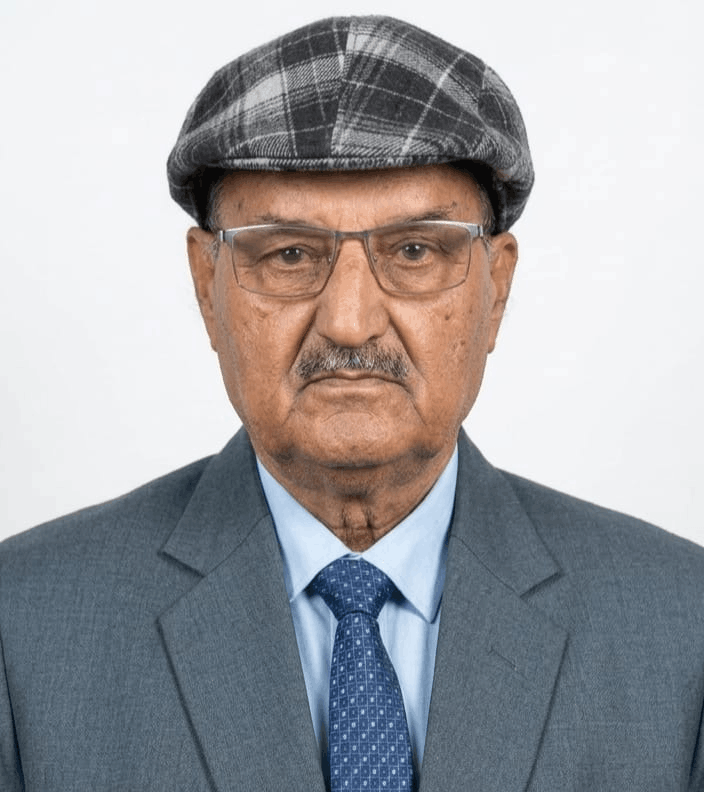
Shri Satyabhan Saraswat son of Late Pandit Sri Ballabh was born on 1st January 1947, in a Brahmin family in Madanpur. He retired as Joint Director from Regional Sericultural Research Institute and is presently staying at Dehradun.
His father Late Pandit Sri Ballabh was basically a farmer and also a part time Professional Pandit. He had done his high school from Agra around 1916. Although he got job in Delhi but due to sudden demise of his father, he was forced to come back to village Madanpur to look after his family and agricultural lands. During the British rule era in India, villages were ruled and looked after by Zamindars. Since his father was the only educated man at that time in village as such, he was offered the job of Accountant by then Zamindars of Madanpur, Late Lala Gopal Bihari Mathur which was accepted by him. Also, he was offered job of a teacher in Madanpur Uchchattar Madhyamik Vidyalaya. In 1947, after independence Zamindari system was abolished and so on request of Lala G.B. Mathur his father continued his teaching job and thus was closely associated with educated Mathur clan.
Born in a dedicated Brahmin family, he carries strong Sanatan values like starting the day by daily darshan of Sri Thakur Rajgopalji Maharaj. Regularly having Gopalji’s darshan was his schedule up to Junior High School in village and even when he left the village for his higher studies to Mathura and Agra, whenever he visited village on holidays, he use to first to go temple for Rajgopalji Maharaj darshan rather than going straight to his home.
Ramleela, (a heritage spiritual Performing Folk Art) is an age-old tradition of Madanpur village which is being performed at the premises of Sri Thakur Rajgopalji Maharaj Mandir from last 155 years and is continued till date. All Madanpur residents are great artist and have especial love for Indian classical Music, Art and craft, musical instruments playing etc. Villagers enthusiastically perform Ramleela every year and this tradition is passed to next generation voluntarily by them. Shri SarawatI too was a trained artist of Madanpur village Ramleela Mandali and actively participate in it. He still carries and cherish the profound memories of these performances.
Madanpur Uchchattar Madhyamik Vidyalaya, a state Government School was established in village by the efforts of Late Shri Surendra Mohan Mathur (Founder & Manager) and Late Shri Radhe Lal Tiwari (Founder & Principal) around 1963. The school was initially operated from the Haveli of Shri Surendra Mohan Mathur and was for a long period of time was operational from his Haveli. Later on, it was relocated on a Panchayat land near a pond and a dedicated school building constituting 2-3 classrooms and a temporary shed was built by personal funding of Late Shri Kailash Narayan Mathur and his brother. To this structure, in the memory of their parents a concrete principal room was constructed by Shri Satyabhan Sarawat and his brothers. Thereby contributing and strengthening educational infrastructure and ensuring improved access to quality education for future generations.
Since his childhood, admiring Mathur clan who were all educationist he used to worship Gopalji with only one desire of seeking blessings for education and suitable jobs. Rajgopalji Maharaj fulfilled all his prayers by not only awarding him with highest qualifications up to M.Sc. Ph.D. (Research scholar) but he was able to qualify for Scientist Competition of Govt of India. He has great faith in HIM and feel that behind all his progress from school teacher, (Firozabad) to Senior Scientist & Joint Director (Govt of India) are blessings of Rajgopalji Maharaj.
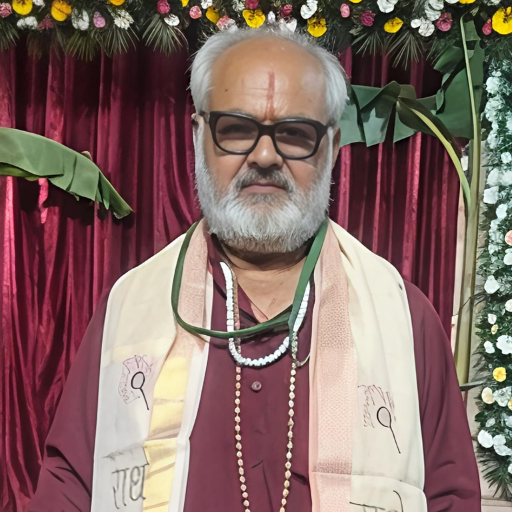
Pt. Shri. Kamlesh Kumar Bhardwaj son of Pt. Shri. Radha Mohan Bhardwaj is born on 10.8.1956 in village Madanpur, Uttar Pradesh and presently residing in Madanpur.
His father Late Pt. Shri Radha Mohan Bhardwaj was an appointed Pujari at Sri Thakur Rajgopalji Maharaj Virajman Mandir, Madanpur under the managership of Shri Kailash Narayan Mathur. He dedicated his life serving Shri Rajgopalji Maharaj, who is a manifestation of Lord Sri Ranganath Himself till 1973. Continuing the legacy of his family Pt. Kamlesh in 1971 which was the centenary celebration year of Shri Thakur Rajgopalji Maharaj temple during Bhramoutsav was sacrament under the leadership of Lalla Swami. Under eternal Vedic norms by performing sacred 121 Kalash Abhishek of Shri Rajgopalji Maharaj accepted Vaishnav sect as his religion and moved forward on the path of serving Sanatan Dharam for the rest of his life.
He is well versed in various Hindu rituals and Pujas. He professionally performs them and other Vedic rituals on personal request. He practises strict vedic norms, and is the key facilitator in propagation of Hindu mythological tales, Vedas and Dharam.
The various festivals particularly Brahmaotsav which are traditionally being celebrated all through the year at Sri Thakur Rajgopalji Maharaj Mandir from last 155 years still follow strict Vedic norms with typical South Indian rituals practice. These are performed with same divinity as before and are attendant by huge crowd constituting pilgrims around globe is worth seeing. Adding, a sacred touch and continuing tradition Pujaris from Sri Rangji Temple Vrindavan participates in Bhramoutsav and enhance the beauty of Utasav. He being versed with all these traditions upheld them and serve Rajgopalji Maharaj with the same devotion as his family legacy. The consolidated services offered by him at temple is as below.
He is a very good performing artist and presently mentor age-old Folk-Art Form of village known as “Sri RamLeela Mahoutasav, Madanpur”. It is a heritage tradition of last 155 years of performing RamLeela in the premises of Sri Thakur Rajgopalji Maharaj Mandir. He does make-up of the artists showcasing various characters of Ramayan and also himself perform the character of “Ravan”. He provides training to the new artist and he has been in service of Sri RamLeela Mahoutasav, Madanpur from 1975.
He is well versed in playing Harmonium and have the knowledge of Indian Classical music. He heads Sri Thakur Rajgopalji Maharaj Mandir Kirtan Mandali. This autonomous musical group of temple constitutes rural people who have knowledge of age-old devotional art forms, performing arts, music and vocals. The Mandali voluntarily performs on various occasion under him and showcase their talent in seva of Rajgopalji Maharaj. Below are the events showcase they them: