Shri Thakur Rajgopal Ji Maharaj Ki Jai !
 Srimate Ramanujaya Namaha !
A 155-Year Heritage Tradition of Folk Theatre and Sacred Devotion
Ramleela is a highly revered folk theatre and staging art form of Uttar Pradesh, India. It dramatically re-enacts the life of Lord Ram based on ancient Hindu epic, Ramayan or secondary literature such as Ramcharitmanas. Performed annually across North India during the autumn Navratri-Dussehra festival cycle, it is staged outdoors combining music, dance, and dialogue. After the enactment of the legendary war between good and evil, the Ramleela celebrations climax in the Vijayadashami (Dussehra) night festivities where the giant grotesque effigies of evil such as of the rakshas (demon) Ravan are burnt, typically with fireworks.
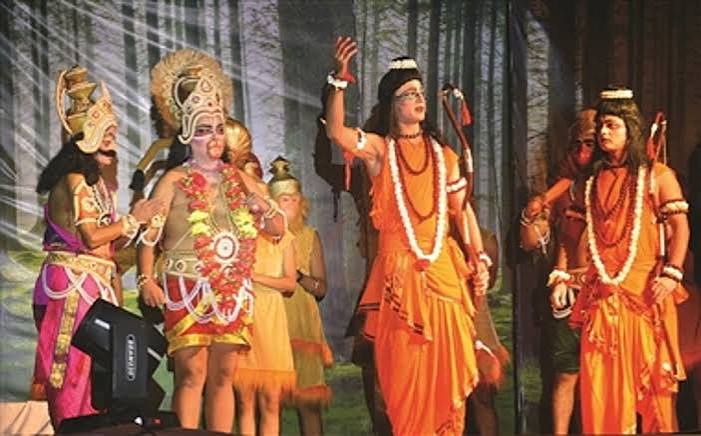
Ramlila is a compound Sanskrit words "Ram" (Vishnu's avatar) and "Leela" (play, game, sport). According to James Lochtefeld, the word connotes a "playful drama about Rama", where it is both entertainment and a "deeply serious religious act" that has spiritual significance to both the actors and the audience.
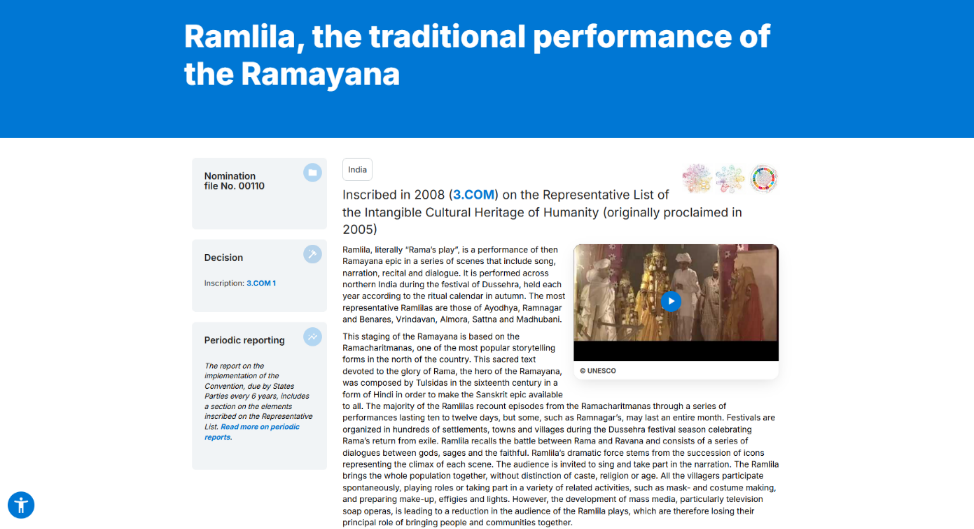
In 2008, this vibrant tradition was inscribed onto the UNESCO Representative List of the Intangible Cultural Heritage of Humanity.
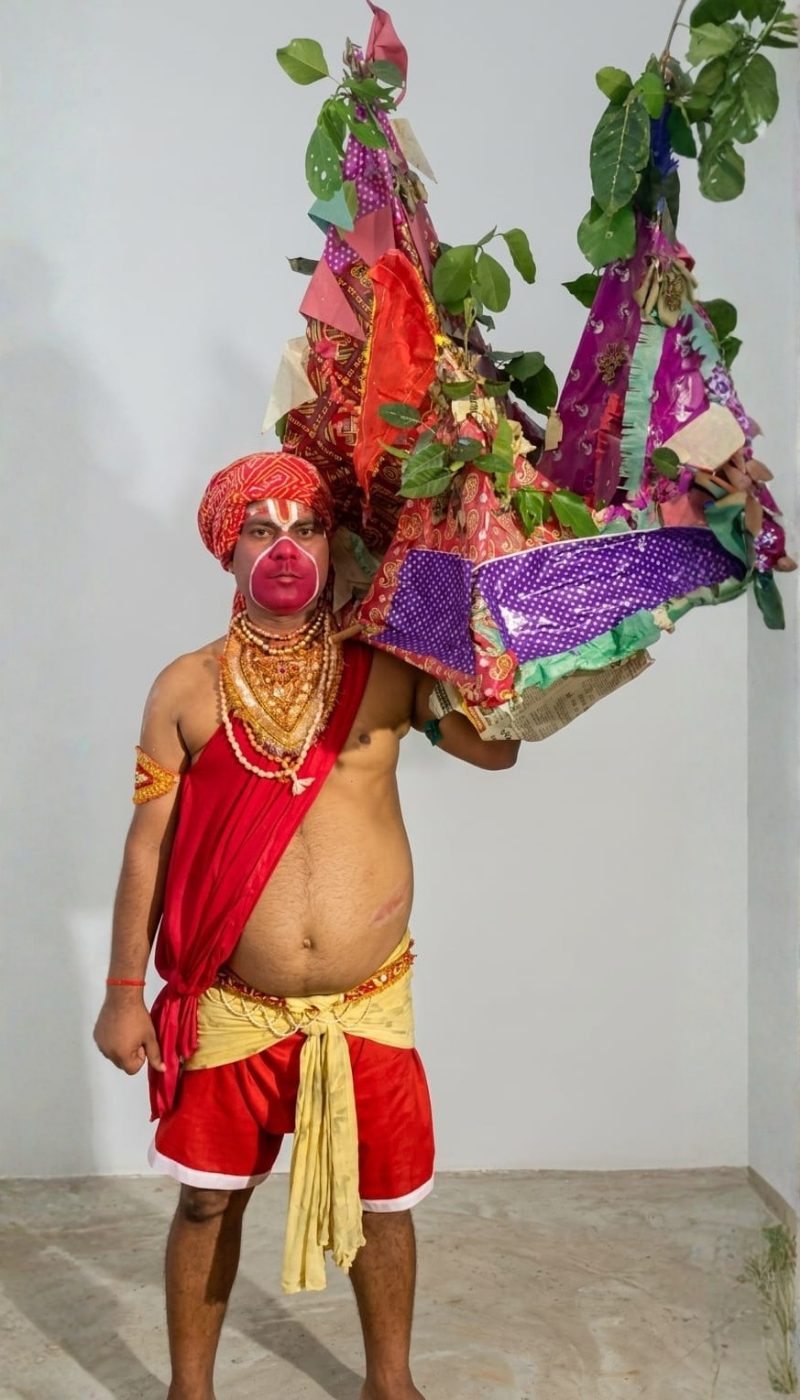
Ramleela revolves around the epic of Ram, the seventh avatar of the Hindu deity Vishnu and the central figure of the Ramayan. The epic text is dated to the 1st millennium BCE and Ramleela is an adaptation of those stories. The epic recites His childhood along with other major characters, such as Sita, Lakshmana, Ravan and others. It includes chapters on the marriage of Sita and Ram, the exile of Ram because Dharm requires him to give up his throne, Sita and Lakshman joining him in the exile, their journeys through India and they meeting revered Rishis of Hinduism, the abduction of Sita by demon Ravan, the sorrow of Ram and Lakshman, their hopelessness, how they creatively build an army from other living beings in the forest such as monkeys, their journey to Lanka to confront Ravan, the battle between the good and evil, the destruction of Ravan, the return of Ram to Ayodhya and as king, and the life thereafter.
The core team of performance artists train for the dance-drama, but the actual performance attracts impromptu participants from the audience and villagers. This art form is a part of the Hindu culture, found for many gods and goddesses, but those of Ram, Durga (as Durga Puja) and Krishan (as Rasleela) are the most popular and annual events in the Indian subcontinent.
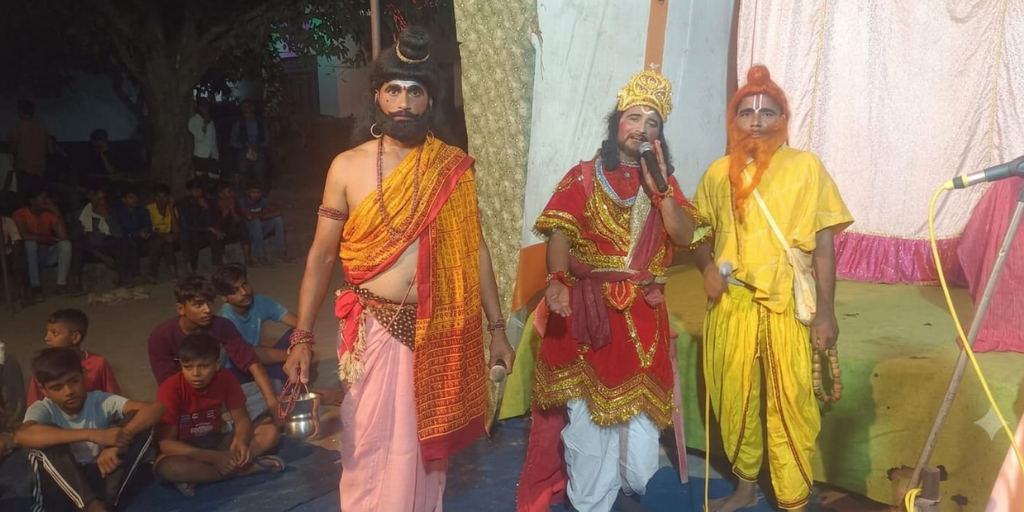
Ramleela folk staging is organised in numerous villages, towns and neighbourhoods. It is not a simple play acted out in a drama theatre, but it is structured to encourage and allow the audience to participate. In major productions, the audience walks with the actors from one site to another, they chant or co-recite passage, they immerse themselves as minor or significant characters in the play, while the major roles are played by a troupe of artists. The audience cheers when the good gets the upper hand, they are sorrowful when a wrong happens such as the kidnapping of Sita and her imprisonment against her will by demon Ravana. They participate in the burning of the effigies, and the community is welcome during the return of Ram back to Ayodhya. It is theologically an immersion experience.
The festival is both a religious and cultural event, bringing the population together, states UNESCO, "without distinction of caste, religion or age". The audience such as the villagers participate spontaneously, playing roles or helping out in setting and cleaning up the stage, making costumes, and upkeep of the Ramleela area.
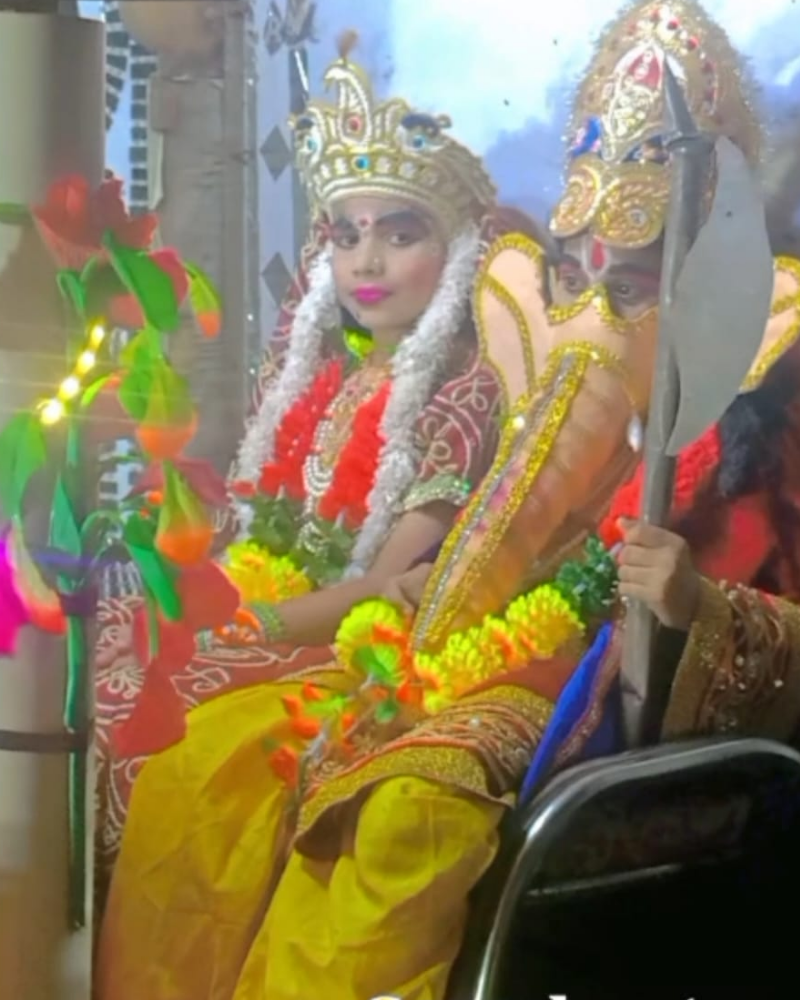
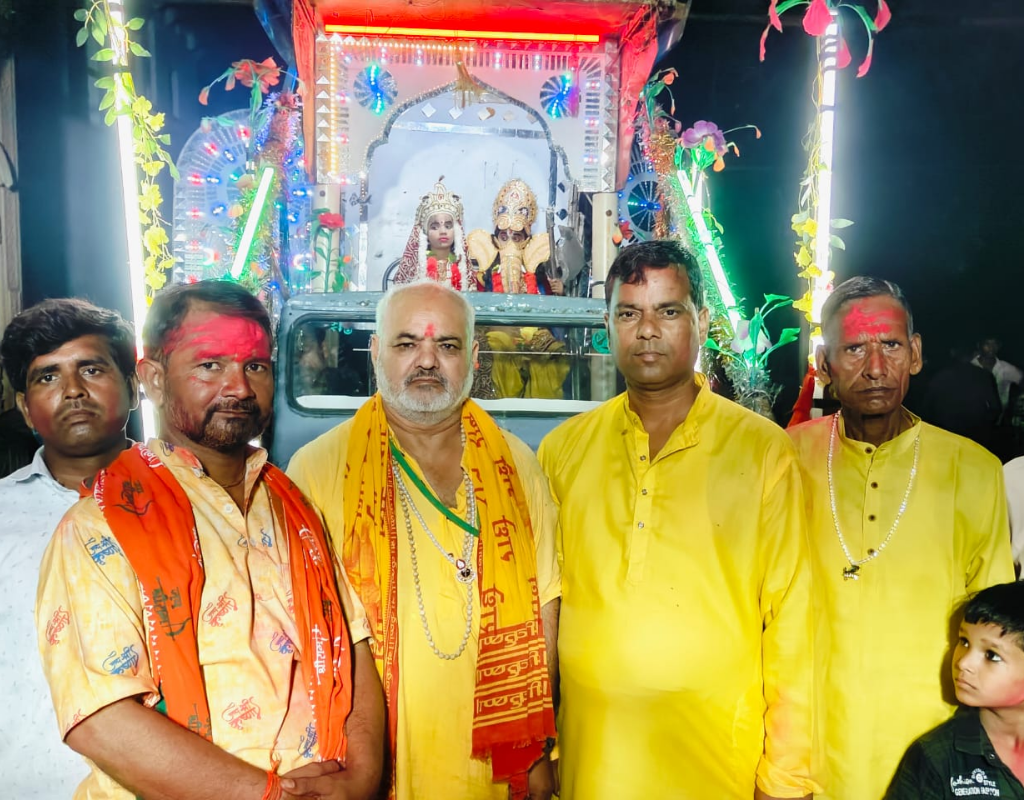
The tradition of staging the Ramleela at Sri Thakur Rajgopalji Maharaj Virajman Mandir premises, Madanpur was probably started along the side of establishment of temple in 1871 by Mathur clan who were then the Zamindars of Madanpur. It was very grandiose during the Zamindari period and also post-Independence under the patronage of various Managers of Mandir Management Committee alongside by receiving, continuously regular patronage from the subsequent successors of Madanpur Mathur clan. They not only fund to create a participatory environmental theatre (Site-specific theatre) on a grand scale but actively participate in it by playing themselves various characters from Ramayan.
The motive of staging Ramleela in rural area of Madanpur by educated, influential and culturally rich Mathur clan with their personal involvement was vital for preserving cultural heritage and fostering social cohesion. It also inculcated in the villagers love for art, culture and music. It transforms the whole village into vibrant hubs of storytelling, where locals act as organizers and actors, reinforcing bonds across diverse castes and classes while passing core values like dharm (duty) and satya (truth) to younger generations.
Historically, it was organized in an open-air theatre of Sri Rajgopalji Maharaj Mandir Parisar at night by temple management committee, it is usually staged by amateur acting teams drawn from all segments of the society. Singers and musicians, men and women, elderly and youth played different parts, sang the verses to music, recite dialogues. The recitations and the narrative of the play were usually based on Ramacharitamanas. The dialogue were improvised, and often responsive to audience reactions. Dhol drummers and other musicians participated. The atmosphere was usually festive and free, with the audience cherishing and commenting as the story proceeded. The stage was surrounded by food stalls and larger productions had a fair nearby. Surrounding areas temporarily transformed into bazaars to cater to the audience.
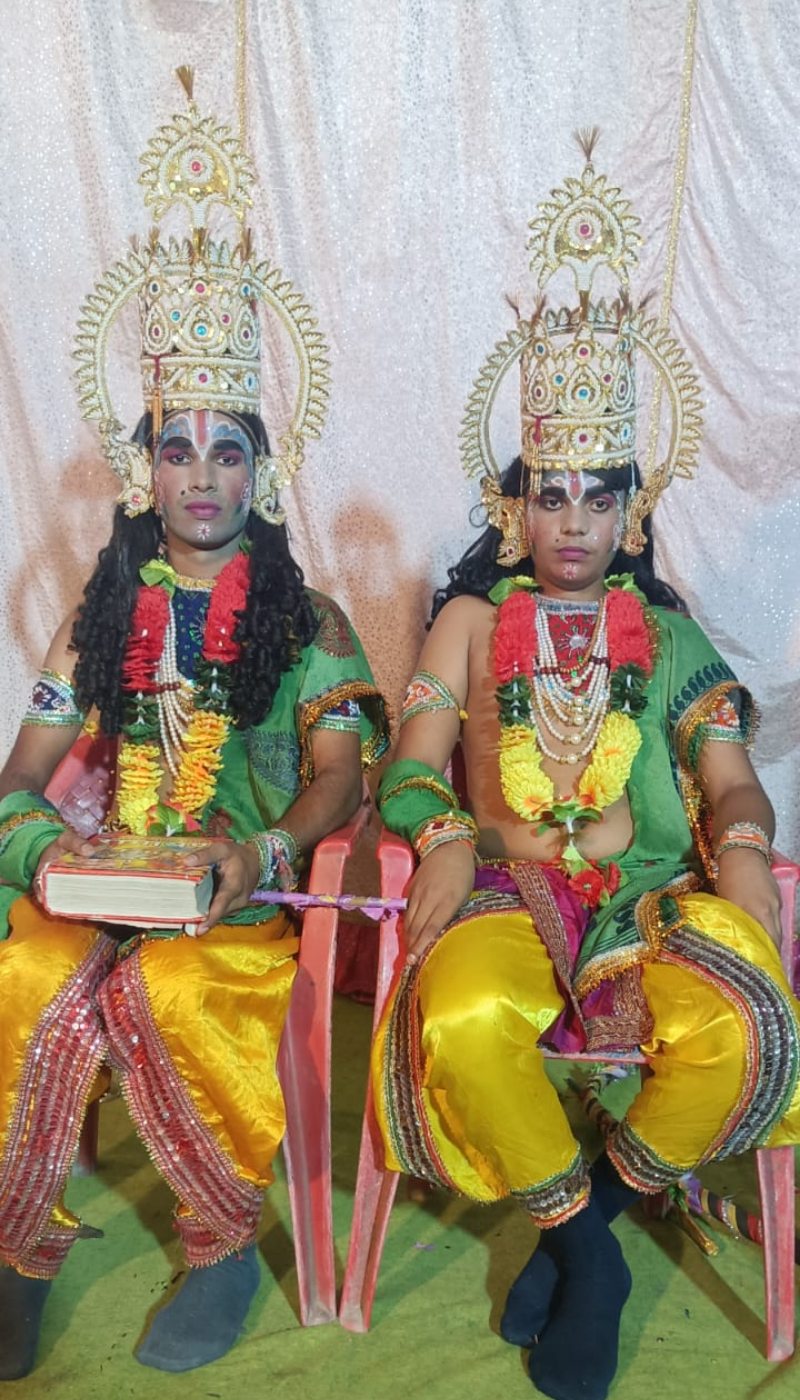
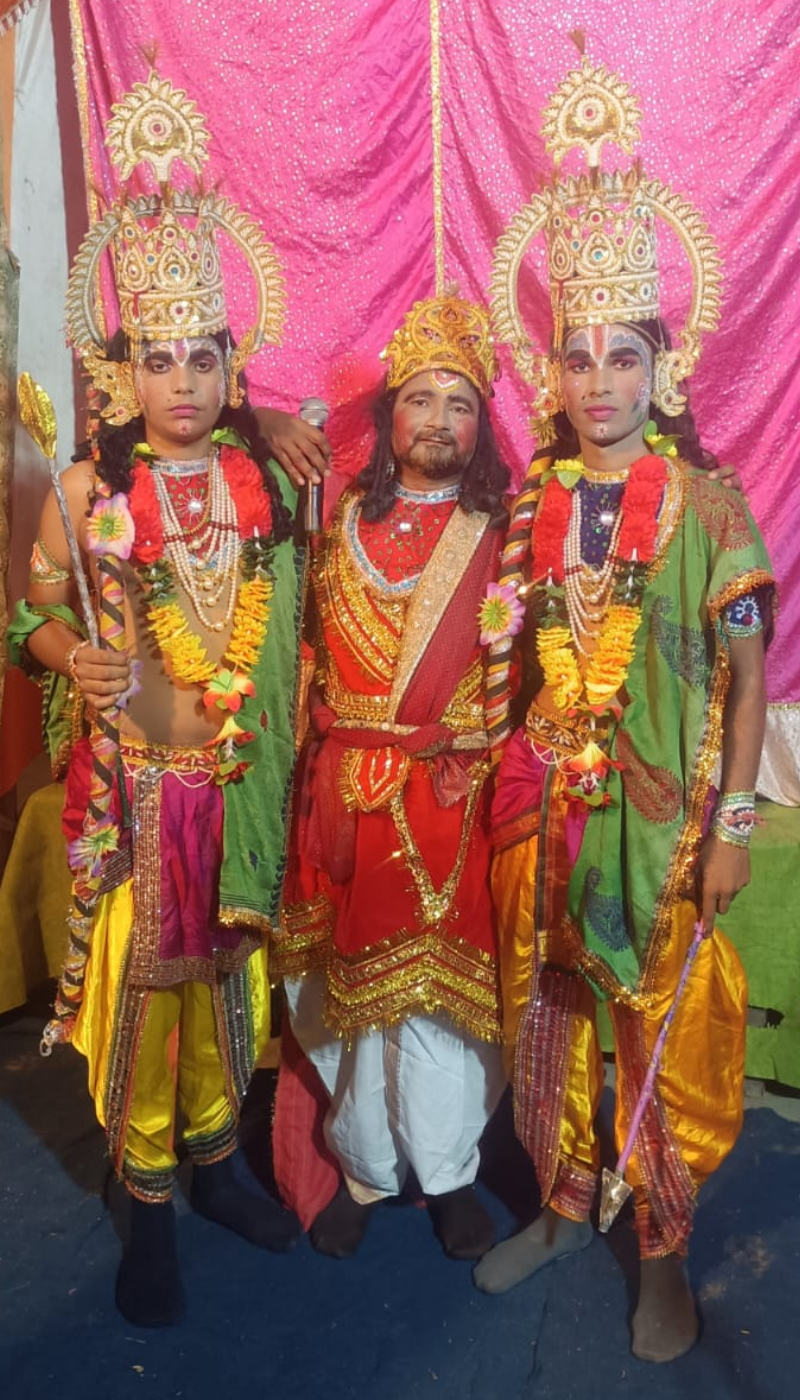
However, with the passage of time as the various members of Mathur clan migrated from the Madanpur, this splendid staging of Ramleela got deteriorated. But due to the seed sown, generations before by them in village, this tradition and heritage staging is carried forward by Panchayat of Madanpur supported by the effort of talented artists and villagers of Madanpur still at the Mandir Parisar. Presently, Sri RamLeela Mahoutasav of Madanpur is majorly funded by Panchayat and fundraising in the community which is a meagre amount and is insufficient for a grand staging. Actors and musicians are typically don't get paid, or get paid little for their efforts. Still residents of Madanpur maintain their heritage and cultural alive. Mathur clan especially senior members still holds in their heart unforgettable legends of these staging from their childhood and earnestly wants to revive this heritage.
The significance of these rural performances goes much deeper than just an annual theatrical event:
Ramleela is the soul of Uttar Pradesh’s folk culture and also inscribed UNESCO's Representative List of the Intangible Cultural Heritage of Humanity. Its revival needs a balance of cultural preservation with structural modernization. The art form faces competition from digital media, depleting community funds, and a shrinking pool of young artists. Implementing modernizing staging while preserving tradition, mobilizing youth participation, and securing local community funding and government support can restore Ramleela to its position as a vibrant cornerstone of regional identity and cultural tourism.