Shri Thakur Rajgopal Ji Maharaj Ki Jai !
 Srimate Ramanujaya Namaha !
Preserving the Legacy of Civic Benefactors and Distinguished Scholars
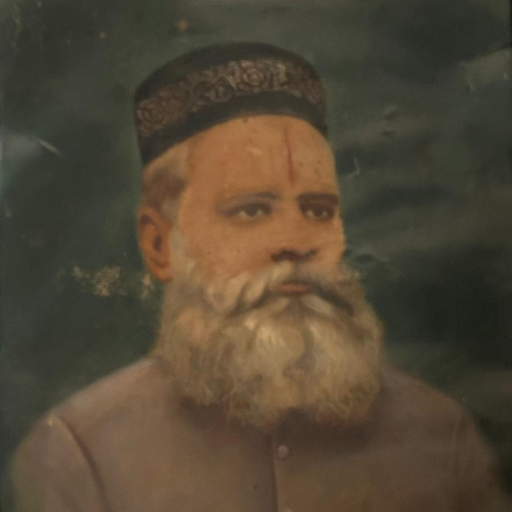
Lala Shree Narayan Mathur adopted son of Lala Kunj Behari Lal Mathur and biological 6th son of Lala Bal Mukund Mathur was great Zamindar of Mathur Clan. He was holding a huge land under his control which includes whole Shikhohabad, Madanpur, and vicinal 18 -20 villages.
Lala Shree Narayan Mathur was truly a significant historical figure of the Mathur clan in Uttar Pradesh and was the quintessential "architect" of modern Shikohabad. His transition from a traditional Zamindar to a civic benefactor is a classic example of how a few influential families shaped the urban geography of Uttar Pradesh.
His legacy of philanthropy is impressive, especially considering that the core infrastructure of the city from healthcare (Old Government Hospital), food (Gud ki Mandi, Sabji Mandi) and transport (Shikohabad Bus stand) to education rests on land he provided. The prestigious Narayan Inter and Degree Colleges, Shikohabad which were named after him stand as a lasting tribute to his commitment to the community's future.
It’s quite common for such figures to have more presence in oral traditions and local landmarks than in formal history books, as many records from the Zamindari era were either purely administrative or lost during land reforms.
His story is a great example of how lineage and legacy were preserved within the Mathur clan and passed on through oral traditions to the future generations rather than textbooks, these stories are the only bridge left to his era. His antique portrait is provided by his great grandson Shri Ajay Mathur New Delhi is also a unique contribution in this preservation.
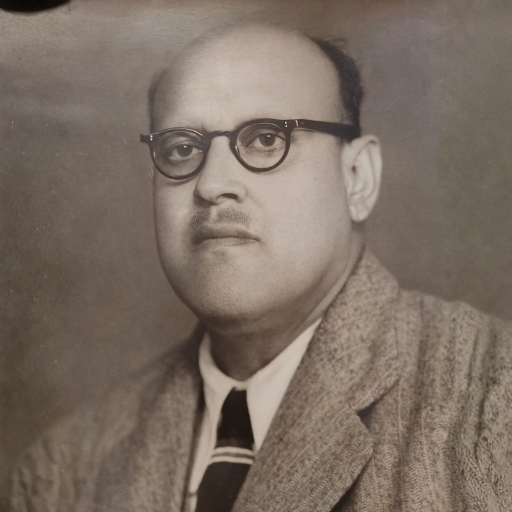
Shri Raghuvir Sahai Mathur was born on 1907 in Madanpur. He is the only son of Lala Shri Rajkumar Mathur, popularly known as Nawab Sahib, who belonged to a distinguished zamindar Mathur clan of Madanpur. Although he was the only heir to considerable property as such, he was very privileged and possess a high status yet he was not attracted to the zamindari way of life. Instead, he believed in education, hard work, and public service. Driven by these ideals, he left the comforts of his ancestral home and moved to Agra to pursue higher studies.
He completed his High School, Intermediate, and B.Sc. from Agra College, where he distinguished himself as a dedicated student. His academic excellence earned him admission to the prestigious Roorkee Engineering College, one of the foremost engineering institutions of its time. Upon completing his studies, he began his professional career in 1932 as the Municipal Board Engineer at Mainpuri. He later joined the Public Works Department as a Civil Engineer, receiving his first posting at Chakrata. Through competence, integrity, and unwavering dedication to his work, he rose steadily through the ranks and ultimately retired as Chief Engineer of the Public Works Department (PWD) in 1960 and later joined JK organisation as chief engineer in Kanpur.
Shri Raghuvir Sahai Mathur perfectly balanced high public distinction with deep spiritual humility. His lifelong commitment to the Madanpur Temple served as a cornerstone of his personal life and a gift to the local community. Despite his demanding professional responsibilities, he remained deeply rooted in his faith and traditions. His devotion to the Madanpur Temple was lifelong and heartfelt. The welfare, preservation, and proper management of the temple were matters of constant concern to him.
Following his demise, his son, Shri Ishwar Sahai Mathur, who later served with distinction as a Justice of the Allahabad High Court, faithfully carried forward his father's legacy. He continued the family's longstanding support of the Madanpur Temple through regular donations and patronage until his own passing.
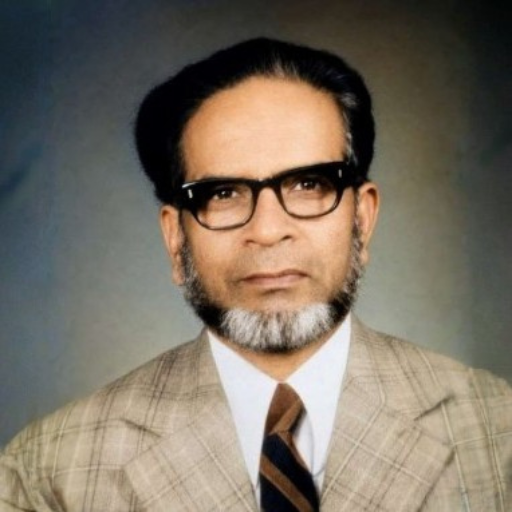
Dr. Rajendra Narayan Mathur son of Late Lala Shri Shyam Narayan Mathur was born on February 29, 1928, in the leap year, into the prominent Mathur landlord family of Madanpur Estate in then Mainpuri district of the then United Provinces of Agra and Awadh. At home, he was nicknamed as Shahzad.
Dr. Rajendra Narayan Mathur had his early education in Shikohabad, where he stayed and guided by his uncle, late Lala Shri Badri Narayan Mathur. He then went to Allahabad University and earned his bachelor's degree. In Allahabad, he stayed with his elder brother, Shri Raghuvansh Narayan Mathur (Gopal), who was a chemistry teacher at Kayastha Pathshala Inter College. It was there that his interest in physics grew. He went to Aligarh Muslim University for further studies, where he earned a master's degree in physics and then a Ph.D. in physics.
His Ph.D. guide was Professor Piara Singh Gill, considered one of the leading figures in cosmic-ray physics in India. Dr. Mathur's research focused on the development of neutron counters and measuring the ability of cosmic rays to travel through different materials, a relatively new and technically complex field in India at that time. His first research paper was published in the Indian Journal of Physics in 1958.
In 1960, he moved to United States. He was appointed as a Research Associate in the Physics Department at Purdue University, USA. He worked there for nearly two years, performing exceptionally well. In 1962, he decided to leave the position and return to India to serve his country.
Upon returning to India, Dr. Mathur joined the Central Scientific Instruments Organization (CSIO) in Chandigarh, a subsidiary of the Council of Scientific and Industrial Research (CSIR) of the Government of India. Here, he was appointed as a scientist. Interestingly, he again found his Ph.D. guide, Dr. Piara Singh Gill, also at CSIO as Director of the institute. Thus, after a long time, the guru-disciple bond was rekindled. CSIO was then the country's premier national instrumentation laboratory, and his work there focused on the design development of the RF mass spectrometer and mass analyzer. His research, conducted in collaboration with Dr. H.B. Lal, was published in the journal "Nuclear Instruments and Methods" in 1968. Few years later, in 1969, he was sent to Calcutta as Deputy Director to head CSIO's Service and Maintenance Center. There were four such centers across the country that handled the repair and maintenance of scientific instruments.
In 1981, he chose the internationally renowned Jawaharlal Nehru University, Delhi, to pursue his research. He was appointed as a professor and also the head of the University Science Instrumentation Center. The center dedicated to the design, development, repair, and maintenance of scientific instruments. He taught and guided numerous students and researchers there. Students who conducted research under his guidance have acknowledged and remembered his contributions in their research papers. He retired from JNU in 1988.
Dr. Mathur was a boy from a small Madanpur village who went to America for research in the 1960s and then returned to his country India and made his distinct identity in the world of scientific instruments.

Shri Krishan Das Mathur, fondly remembered as Lalji Bhaisahab, was a respected, visionary administrator and devoted Madanpur community figure, he played a pivotal role in the social, administrative, and infrastructural development of Madanpur village. Through his selfless service and unwavering commitment to public welfare, he earned immense respect not only within the Mathur family but also among all residents of Madanpur.
Still his notable contribution in Madanpur village infrastructure is fondly remembered and praised by villagers. He being an IAS cadre Officer was instrumental in maintaining the status of Madanpur as Block and helping Gram Panchayat in availing state schemes of welfare and upliftment of Madanpur block.
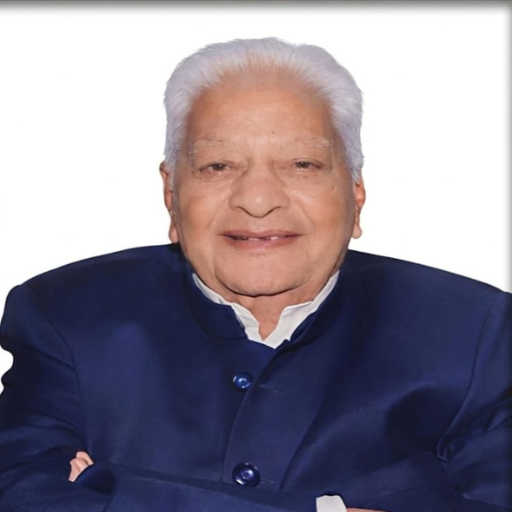
Dr. Virendra Swarup Mathur son of Shri Basant Bihari Lal Mathur popularly known as “Sunder” in Madanpur family was a highly respected physician and influential political figure in Shikohabad (then part of Mainpuri district), Uttar Pradesh. He is widely remembered for his medical service to the poor and his significant contributions to the region's social and educational development. The people of Shikohabad had immense love and affection for him and he was a celebrated figure throughout his life.
Dr. Virendra Swarup Mathur, did his early education from Shikohabad, Firozabad and Allahabad and obtained MBBS degree from SN Medical College, Agra. Besides being a doctor, he was also a good hockey and tennis player. He has immense love for music, literature and sports. He enthusiastically travels to vicinal districts to participate in various cultural and educational events like musical nights, poetry conference, hockey match etc.
In the 1974 Uttar Pradesh Legislative Assembly election, Dr. Virendra Swarup Mathur contested from the Shikohabad Assembly constituency as a candidate of the Bharatiya Kranti Dal (BKD), led by Chaudhary Charan Singh.
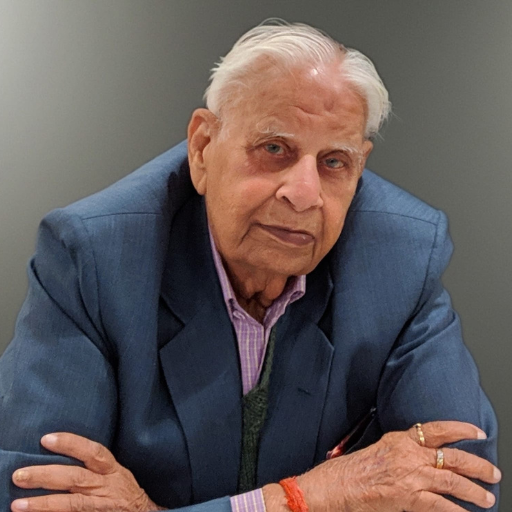
Jyoti Swarup Mathur [MD Medicine, DHP (London), DM (SPM)], was son of Shri Basant Bihari Mathur and Jai Rani, was born on 6th December 1932 in Shikohabad. He went on to become a prominent member of the medical community. On a personal front he had many interests including his unwavering devotion for Shri Thakurji Rajgopal. He was a very religious person, and believed in social service. Supported the community with his pro bono medical and monetary efforts. A prominent example is him using his own time and resources to consult and deliver medicine to the needy and poor. All relatives in the Madanpur family consulted him on medical matters.
He was fond of sports, played tennis all his life till he turned 60. He loved reading mythological books and draw parallels to the modern world. He was a life long learner, not just gathering knowledge on medical matters but all aspects of life, he self taught PhD in Medicine, also in technology. We created a Madanpur family tree, wrote blogs and learnt technology as it changed.